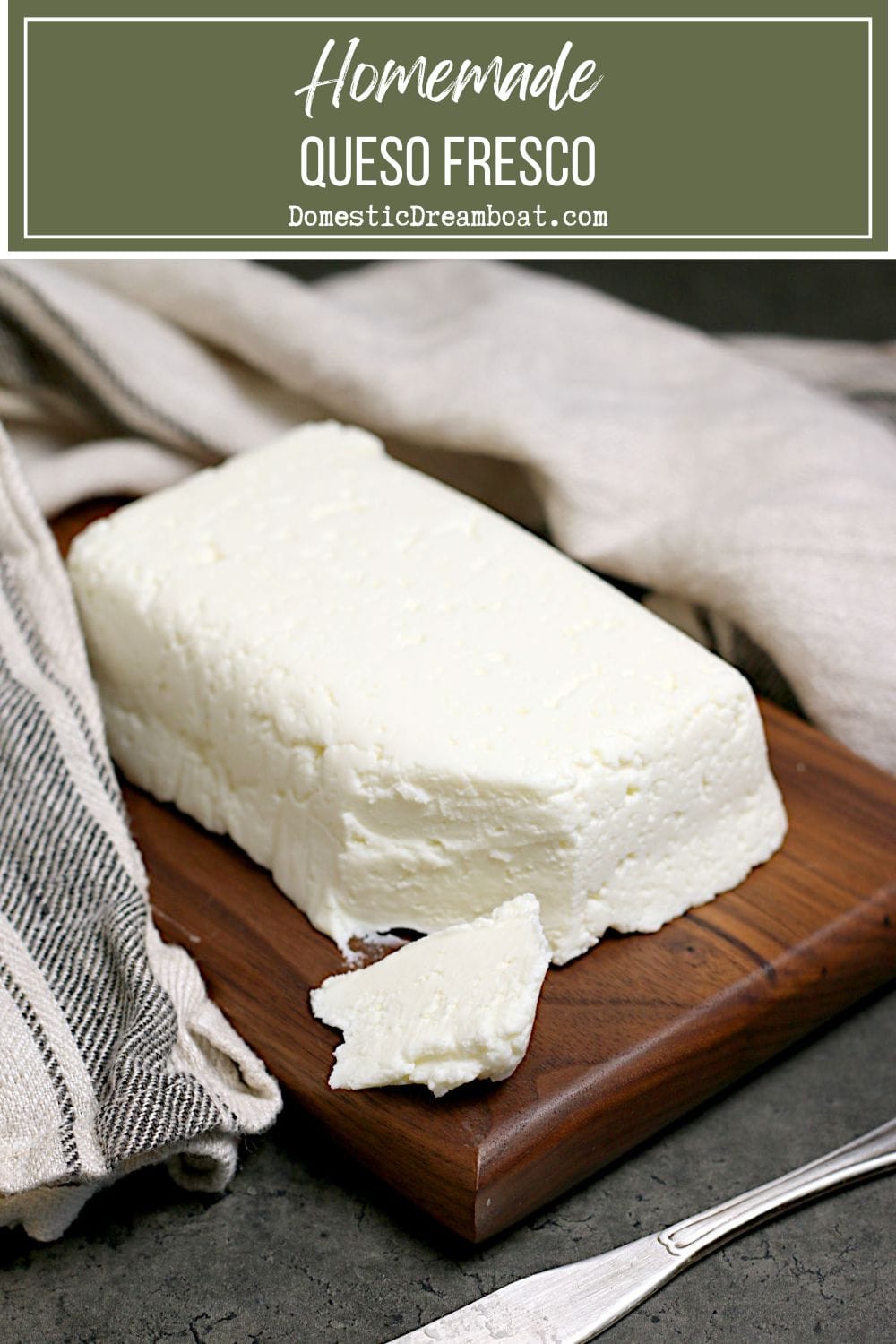
Homemade Queso Fresco
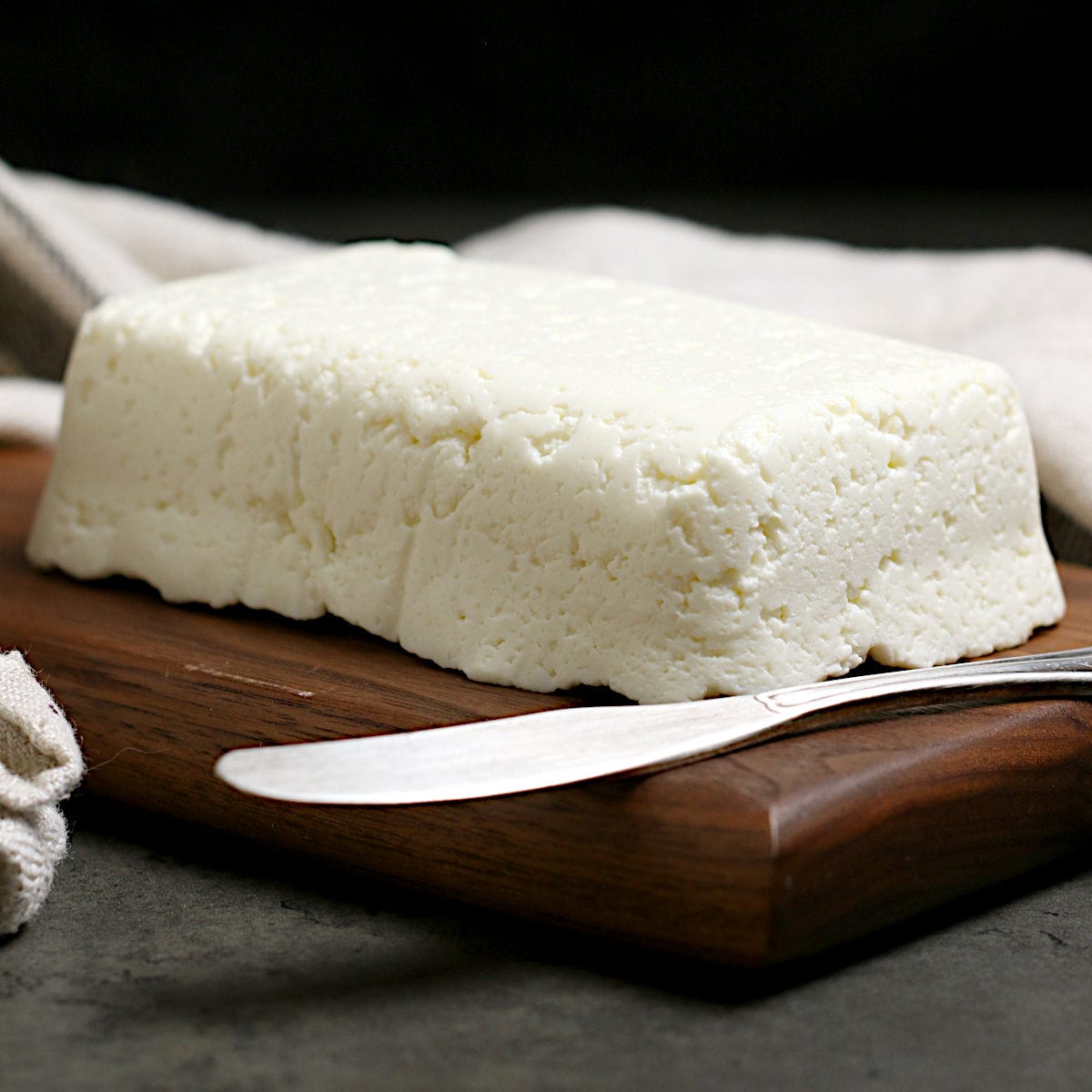
Make Homemade Queso Fresco at home with ingredients you have on hand! This fresh cheese is easy to make and ready within a couple of hours.
One of the things I miss the most about living in the US is easy access to fresh Mexican food and ingredients. And one of the ingredients that I miss the most is queso fresco. Even in the very small suburb we lived in, there was a small Mexican market that usually had delicious queso fresco.
Real queso fresco is nearly impossible to find where I live now (Edmonton). Even the queso fresco from the few Latin markets that exist here tastes very different from what I was used to in the US. I highly suspect that it is simply Feta in different packaging.
Luckily, queso fresco is quite easy to make. All it takes is some whole milk curdled only with acid and heat (vinegar is what I prefer to use). Homemade Queso Fresco doesn’t require any aging. Just a little bit of salt to add flavor is the only other ingredient you will need.
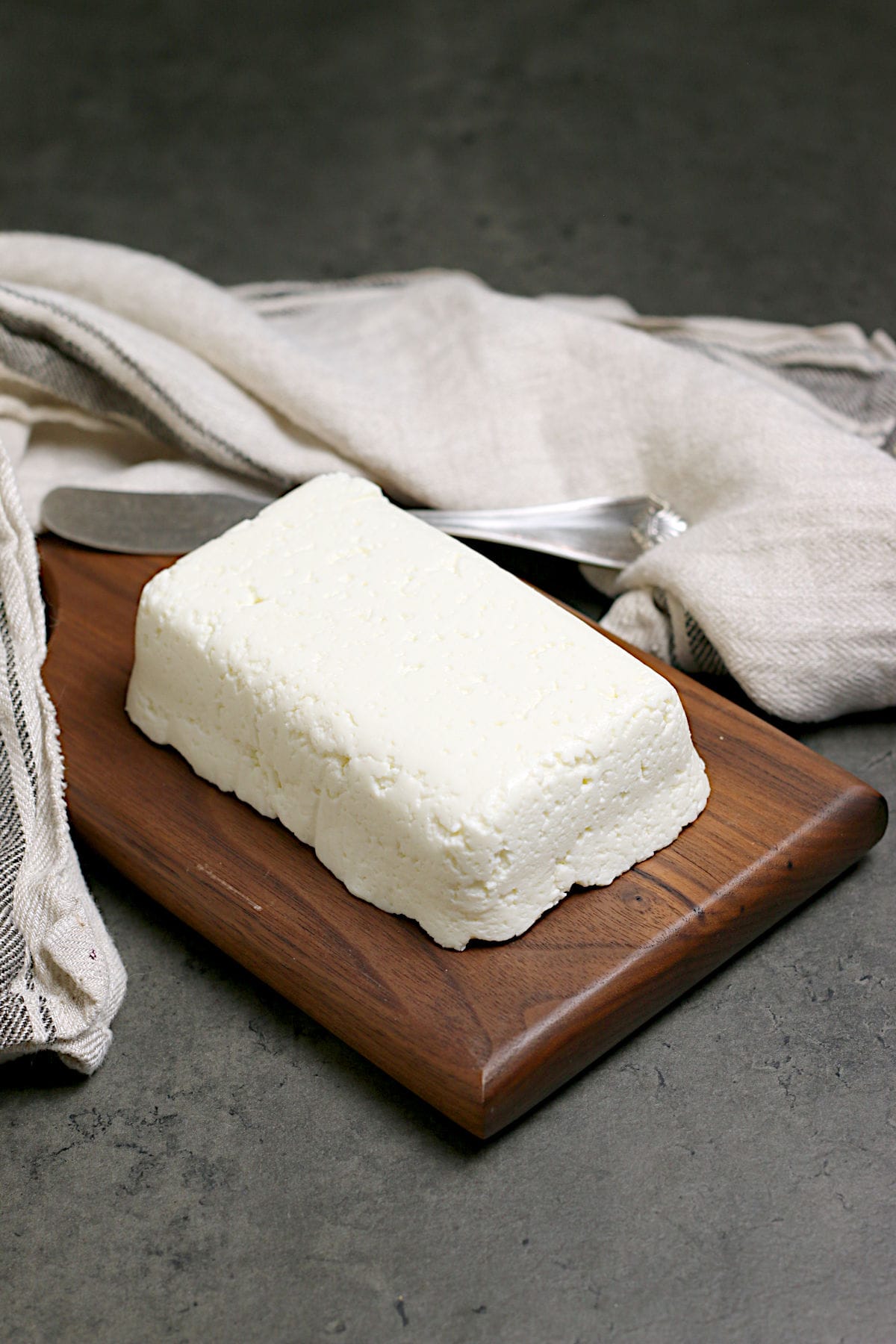
How to Make Homemade Queso Fresco
To make your own queso fresco, start by pouring a gallon (8 cups) of whole milk into a large saucepan or Dutch oven. See the instructions in the ingredients section below to use lower-fat milk and whipping cream to approximate whole milk.
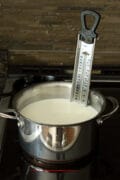
Fit a candy thermometer onto your saucepan, or get your instant-read thermometer ready. Turn the heat on to medium-high, and heat the milk, stirring often, until it reaches 170°F.
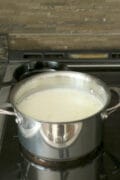
Stir in the vinegar, and continue to stir the mixture for 2 more minutes (you will immediately start to see curds forming). Turn off the heat, and allow the milk-vinegar mixture to sit in the saucepan for 20-30 minutes.
While the mixture is sitting, get ready to strain the curds. Set a large mesh strainer over a bowl, and line the strainer with cheesecloth (if your cheesecloth has a tight weave like the one linked, you will only need 1-2 layers, but if it’s a loose weave like the cheesecloth you buy at grocery or dollar stores, you will need 3-4 layers).
Slowly and carefully pour the milk mixture into the cheesecloth-lined strainer (pouring it too quickly may result in overflowing). Once you’ve poured all of the mixture into the strainer, stir the salt into the curds. Set the strainer aside for 30 minutes to allow the curds time to fully drain.
After 30 minutes have passed, taste a bit of the cheese and assess for saltiness. If you think it needs more salt, add small amounts at a time, mixing it in fully before tasting it again.
Once you’re satisfied with the salt amount, gather the edges of the cheesecloth and squeeze any remaining liquid into the bowl. Continue squeezing firmly until the bundle is no longer dripping.
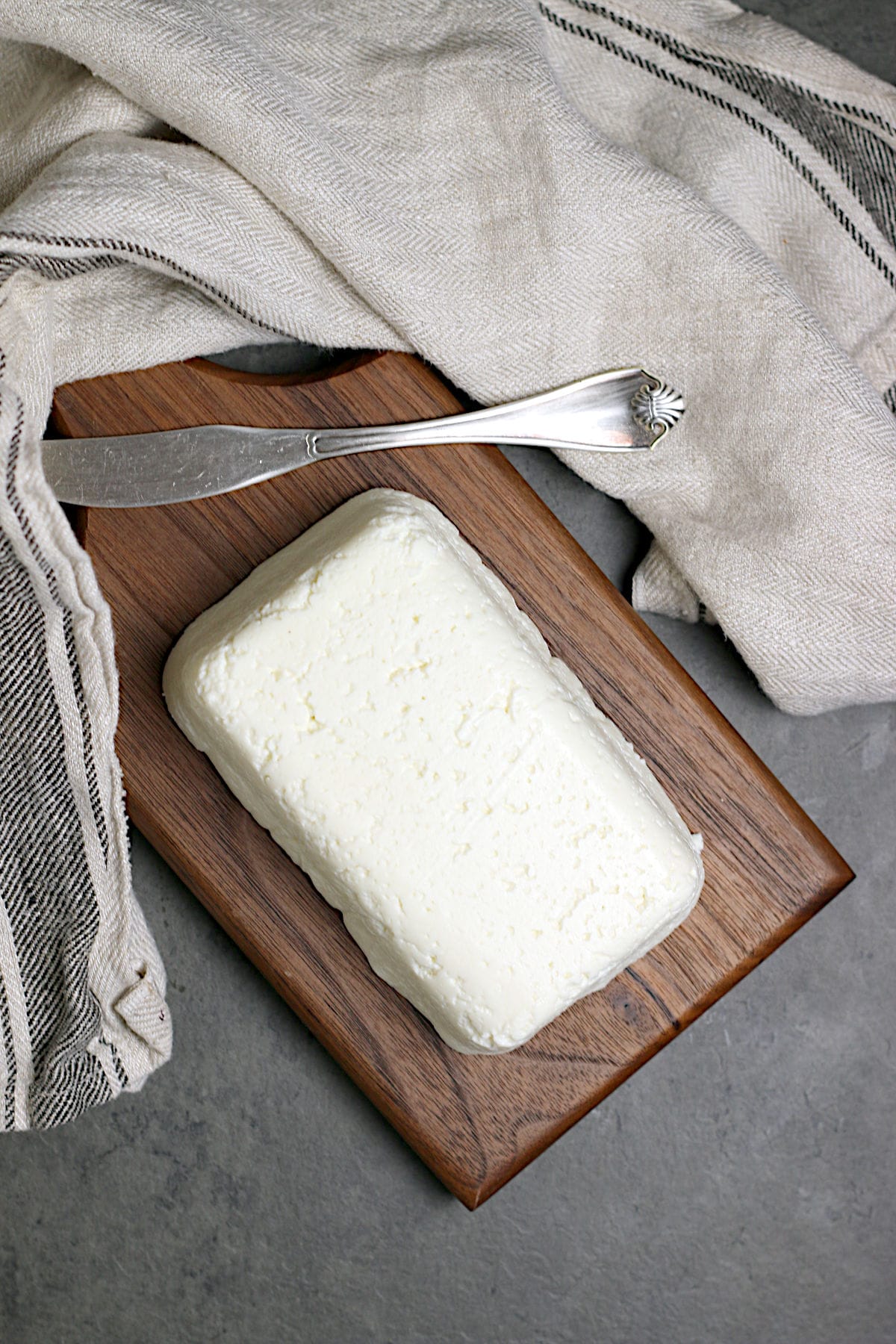
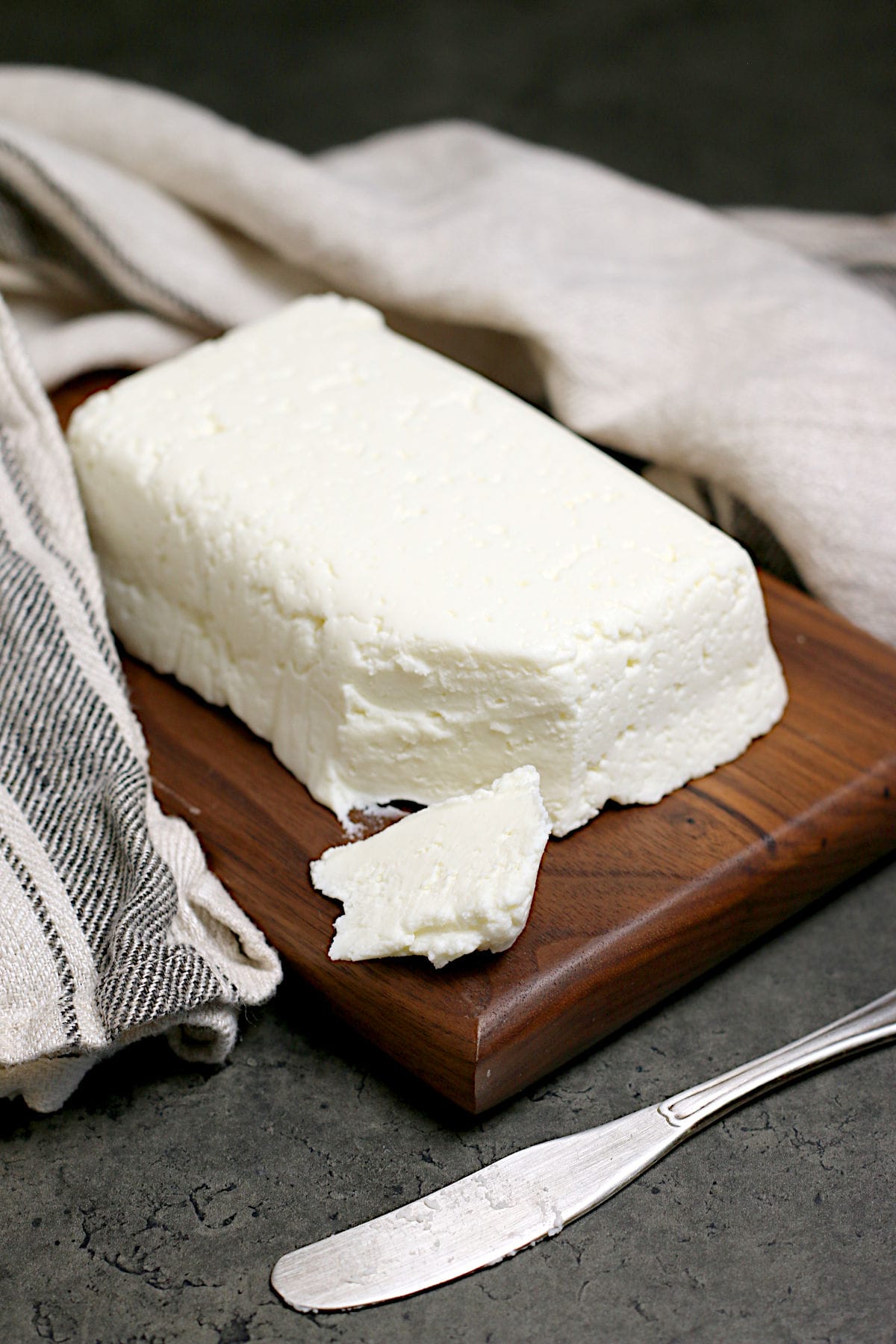
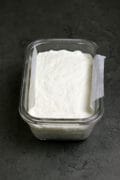
Place the bundle on a plate or cutting board and scrape all of the cheese from the cheesecloth. Form the cheese into a mound (you can do this freehand or press it into an airtight container lined with a wide strip of parchment or plastic wrap to make removing the cheese easier). Cover the cheese or place it in an airtight container and refrigerate it for at least a couple of hours (you can technically eat it now, but it will firm up a little bit after chilling).
Enjoy your homemade queso fresco sprinkled on tacos (try it on zucchini tacos), nachos, eggs, chilaquiles, or salads. It will last up to 5 days in the fridge.
What can I do with the whey after I make queso fresco?
The whey that is left after you make your cheese is nutrient-rich – throwing it out feels wasteful. While you might not want to drink it on its own (it will be a little sour from the vinegar you added), there are things you can use it for:
– Replace liquid in smoothies.
– Replace buttermilk or other liquid in baking (eg. to make things like muffins and pancakes).
– Mix it with fruit juice and/or a little sugar and carbonated water to make a refreshing beverage.
Homemade Queso Fresco Ingredients
- Whole Milk – If you don’t have whole milk, you can use a lower-fat milk with some whipping cream to increase the fat content. For 2% milk, use 7½ cups milk and ½ cup whipping cream. For 1% milk, use 7 cups milk and 1 cup whipping cream.
- White vinegar – Some queso fresco recipes use lemon juice instead of vinegar. I found that this gives the cheese a distinctive lemon flavor that I found unappealing. Using white vinegar curdles the milk but doesn’t provide a noticeable flavor. You can also add a bit of apple cider vinegar for a little tangy flavor if you like.
- Kosher salt – Only use non-ionized salt for this recipe. Avoid using table salt.

Want more cheese-based recipes?
Homemade Queso Fresco Nutrition Notes
The nutrition information for homemade queso fresco is an estimation based on store-bought queso fresco. While it’s easy to calculate what nutrients are going into the recipe, it’s difficult to calculate what you’d be getting from just the cheese, as some of the protein and carbohydrates from the milk will remain with the whey, as will some of the salt that you add initially.
The nutrition information in the recipe below is for one ounce of queso fresco. This recipe makes about 10 ounces of cheese.
Equipment
Ingredients
Instructions
- Pour 8 cups whole milk into a large saucepan or Dutch oven. Heat over medium-high heat, stirring often, until the milk reaches 170°F on an instant-read or candy thermometer.

- Stir in ½ cup white vinegar. With the heat still on, stir for 2 minutes. You will see the mixture becoming curdled at this point. After two minutes, turn off the heat and let the mixture sit for 20-30 minutes.
- Line a large mesh strainer with cheesecloth (see note). Set the strainer over a bowl. Carefully pour the cheese mixture into the strainer, being careful not to pour too much at a time so that the cheesecloth overflows. Once you've poured all of the mixture in, stir in 1 teaspoon kosher salt, then let the curds sit to drain for 30 minutes.
- After 30 minutes, taste the curds in the strainer (at this point, they will still be quite soft). Add more salt if needed, little bits at a time, stirring the curds well between each addition.
- Gather the edges of cheesecloth together to form a bundle. Holding the cheesecloth over the bowl (or sink), squeeze the bundle tightly until it stops dripping.
- Place the cheesecloth bundle on a clean plate or cutting board, and remove all of the curds from the cheesecloth. Form the curds into a mass, either freehand or by pressing it into an airtight container (pro-tip, place one or two strips of parchment in the container under the cheese so that you can easily lift it out of the container when you're ready to use it). While you can go ahead and eat the cheese now, it's best to refrigerate it for a day to let it firm up.
- Serve crumbled anywhere you would use queso fresco – on tacos (try it on zucchini tacos), chilaquiles, salads, eggs, soups, nachos, etc. Store any extra in an airtight container in the fridge for up to 5 days.
Nutrition
Notes
Tried this recipe?
Please Consider Leaving a Review!