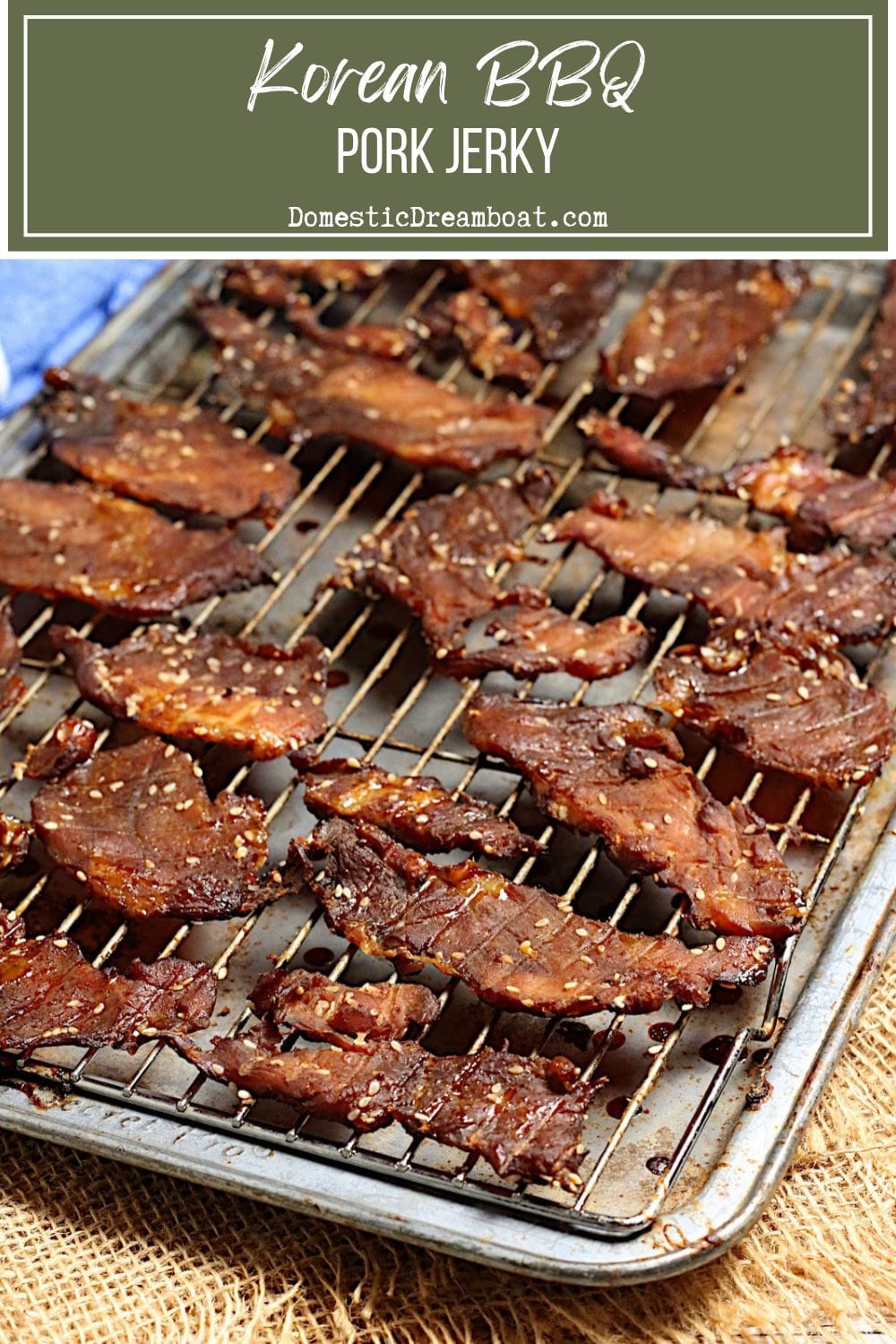
Korean BBQ Pork Jerky
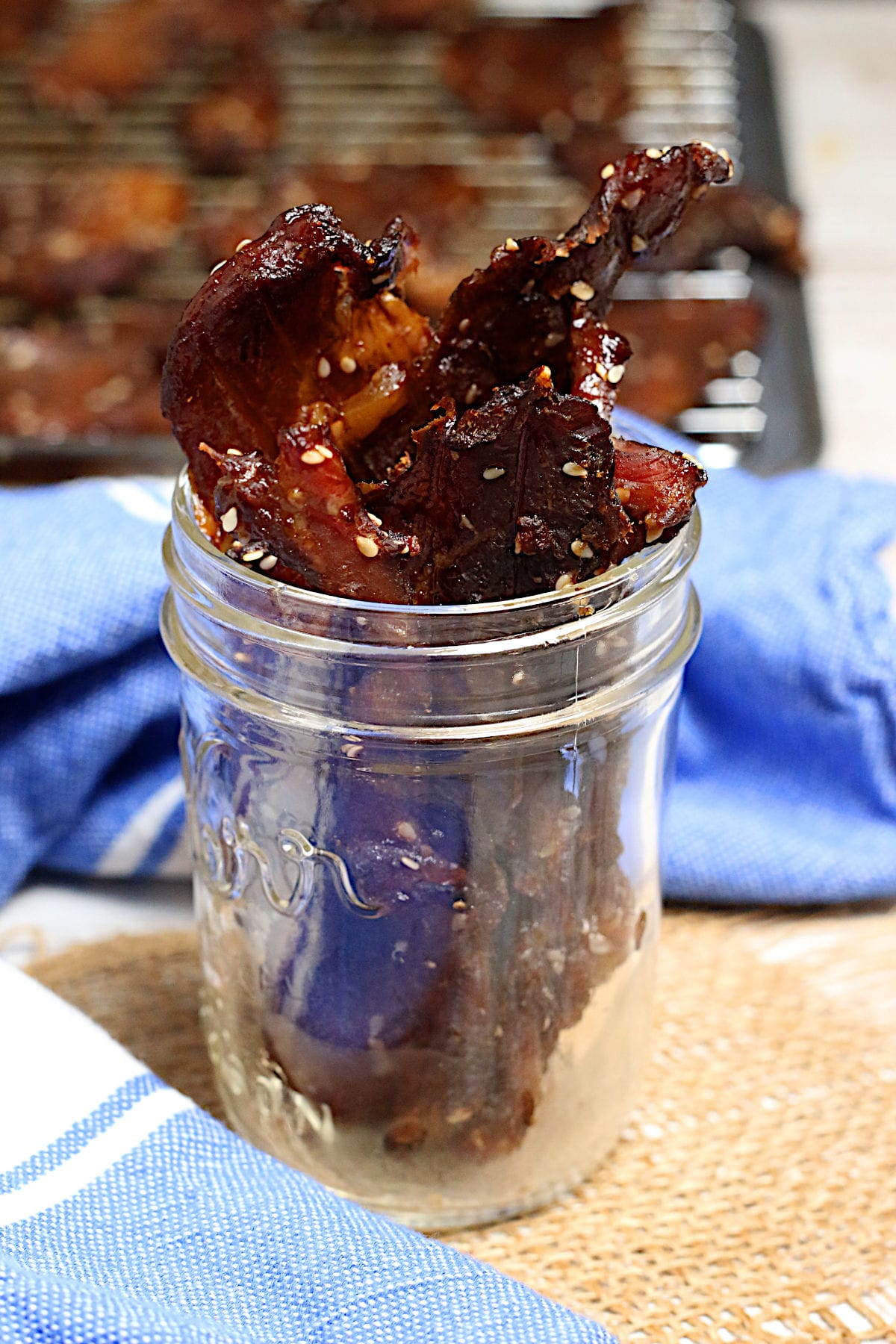
Korean BBQ Pork Jerky is sweet, salty, and savory. Simply slice pork thin, marinate it, and bake on low heat. You’ll love this high-protein snack!
If you’re a jerky fan and you shop at Costco, you might have tried the Golden Island Korean Barbecue Pork Jerky. It’s soft, sweet, and full of savory flavor. We bought a package of it for our recent road trip, and I decided to try my own version of it when we got home.
I had had previous success making beef jerky, but beef has gotten so expensive that making it no longer makes financial sense. However, pork is still pretty reasonable, especially when you buy a large piece in bulk (also from Costco, of course). I often purchase a whole pork loin, which I cut into chops and smaller roasts, and the irregularly shaped end pieces are perfect for cutting thin into jerky.
When deciding what I was going to put into the marinade for this jerky, I knew I wanted it to be a little different from the Golden Island one. Specifically, I wanted it to be a little less sweet. Don’t get me wrong, I still added sugar, but sweet is not going to be the primary flavor here. I wanted garlic, soy, ginger, and sesame to be the prominent flavors, with a hint of onion and just a little gochujang.
The jerky turned out just right – my kids ate it up, and my only regret was that I didn’t make more!
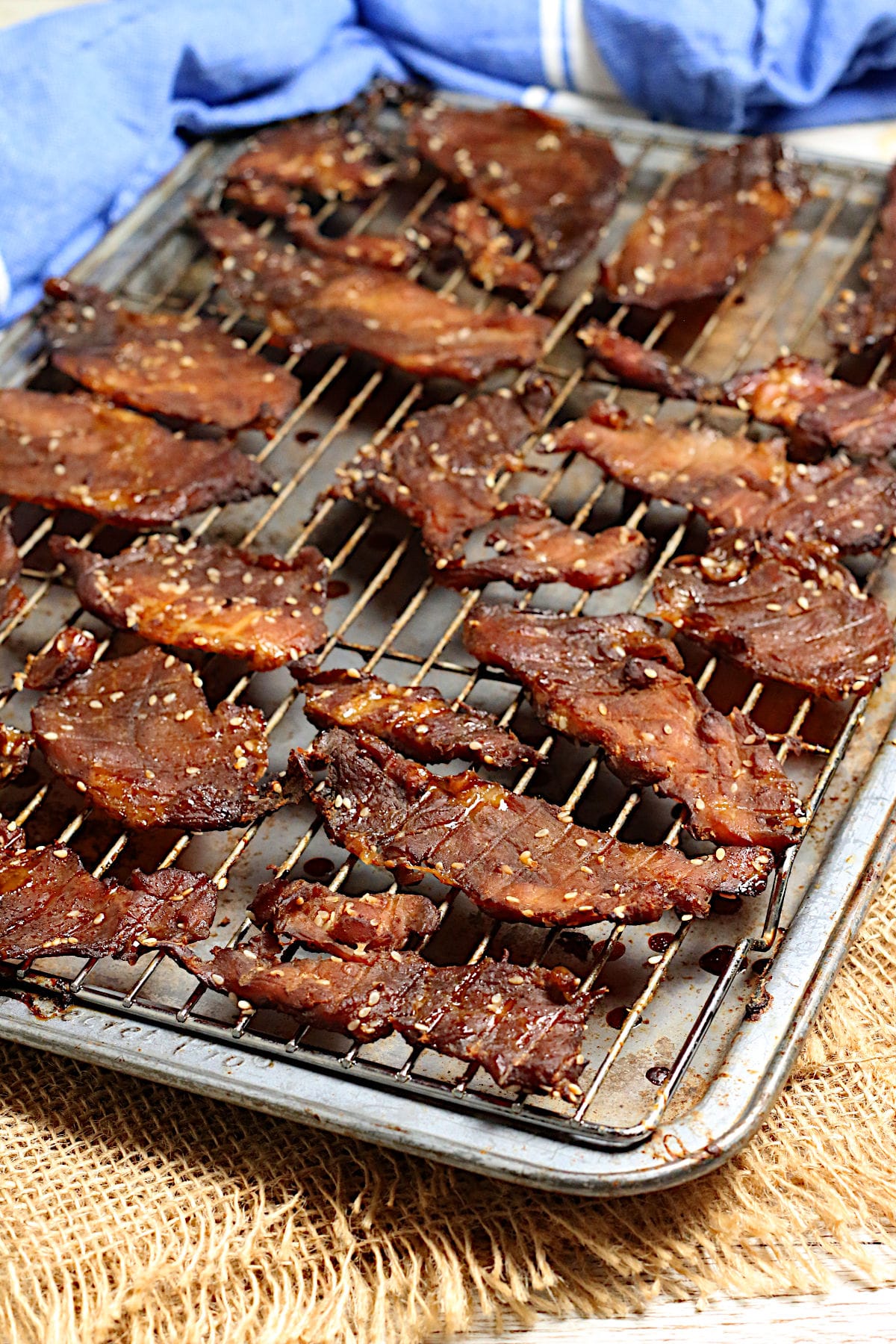
How to Make Korean BBQ Pork Jerky
To make your savory and slightly sweet Korean BBQ Pork Jerky, start by mixing up the marinade. Stir together soy sauce, brown sugar, garlic, ginger, sesame oil, sesame seeds, onion powder, gochujang, and MSG (if using) in a measuring cup or small bowl. Set this aside for now.
Cut up your pork into thin strips, making sure to remove any excess fat and/or connective tissue. Note that you will have a much easier time cutting up the pork if you have a sharp knife and if your pork is partially frozen.
Place the pork strips into an airtight container or a well-sealing zipper bag. Pour the prepared marinade over the pork, and mix slightly to ensure that all of the pieces of pork get coated with the marinade. Set the container (or bag) in the fridge and let it sit overnight or up to 24 hours.
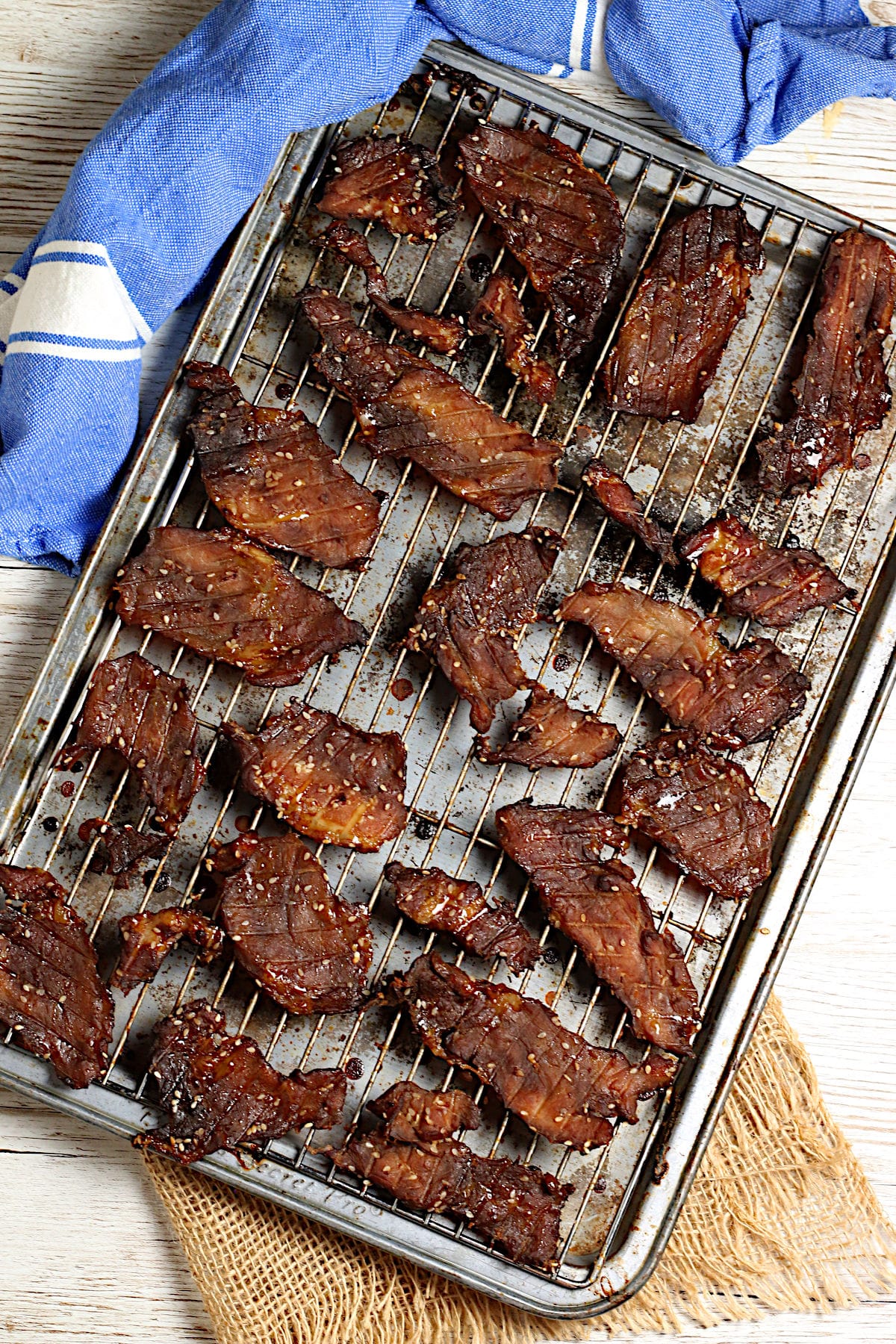
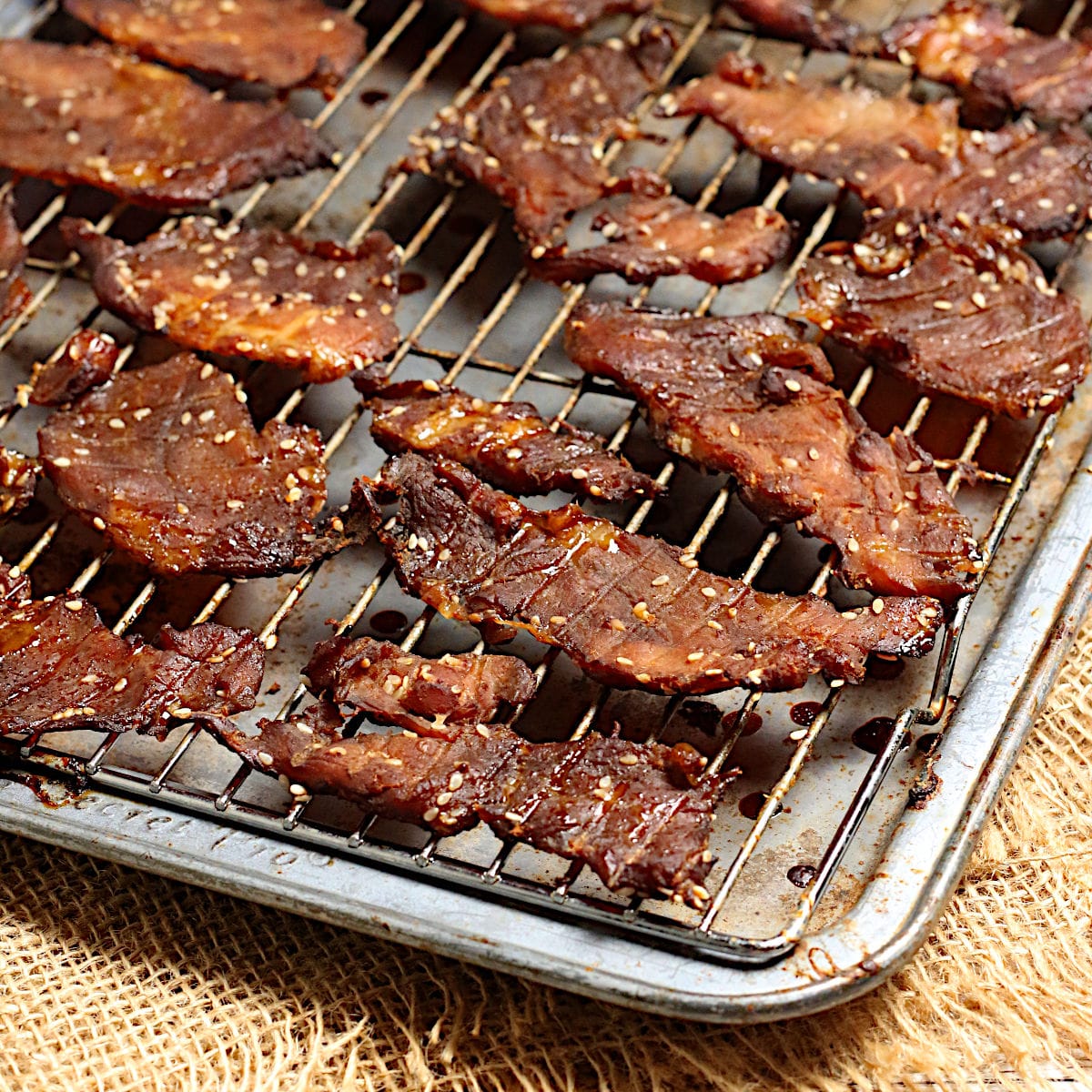
Remove the pork from the container and shake off and discard any excess marinade. Lay the pork strips onto a wire rack that has been set over a baking sheet. Make sure the pork strips are not overlapping (mine just fit onto one baking sheet, but just in case, it’s good to have two on hand if needed).
Bake the pork strips on the middle rack (or upper and lower middle if using two baking sheets) at 170°F for 2 hours. After 2 hours, check how your pork is doing every 30 minutes – it’s likely not done yet. You want the pork to be dry to the touch, but still pliable. Cooking time will depend on how thick your pork was sliced, and on the climate (high humidity means longer cooking/drying time). The pork should be done around 3-4+ hours.
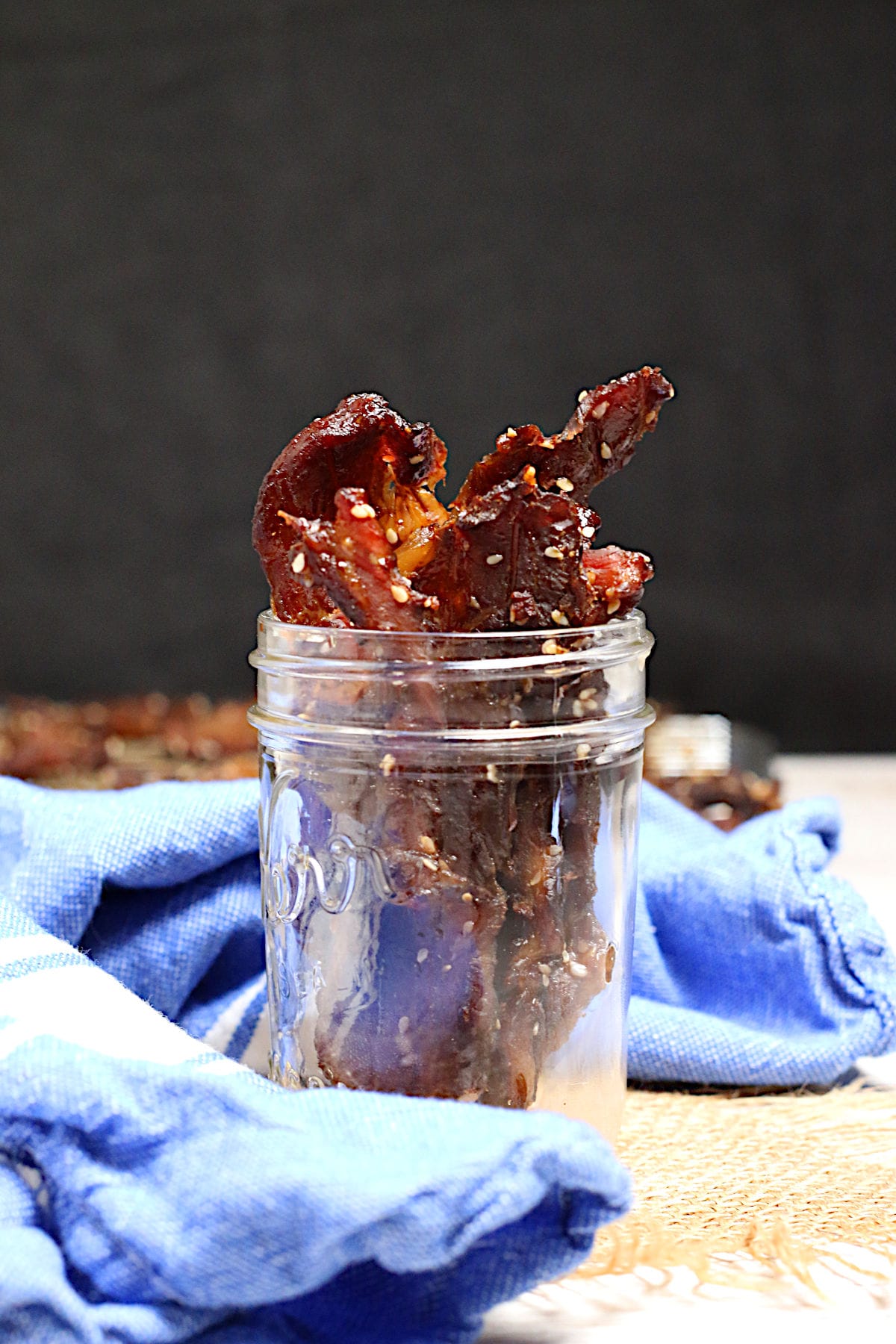
When the pork is done, it’s best to let it cool to room temperature before eating. Store any leftovers in an airtight container in the fridge.
Korean BBQ Pork Jerky Ingredients
- Soy sauce – If you need your pork jerky to be gluten-free, make sure to use tamari or gluten-free soy sauce instead.
- Brown sugar
- Garlic
- Grated fresh ginger – Ginger pro-tip: Always keep a piece of fresh ginger in a zipper bag in the freezer. You can grate it on a microplane straight from frozen.
- Sesame oil – Sesame oil is the oil extracted from sesame seeds. It’s generally golden brown in color, as it usually comes from toasted seeds, and full of potent sesame flavor. You can find it in small bottles in the aisle with other oils, or in the international aisle.
- Sesame seeds – Regular old untoasted sesame seeds is fine here.
- Onion powder
- Gochujang – Gochujang is spicy fermented Korean chili paste. It’s sweet and savory (in addition to being spicy), and adds a ton of flavor. You can find it in plastic tubs in the international aisle of well-stocked grocery stores, or in Asian markets. Simply skip it if you can’t find it, or don’t want to add any heat to your jerky.
- MSG – I like to add a little MSG to savory recipes. It’s a safe and easy way to enhance the flavors in your food, but if you don’t have any, simply skip it.
- Lean pork loin or tenderloin – I used the leftover end pieces from a whole pork loin that I was cutting into pork chops. However, a pork tenderloin would work well and would be just the right size.
Want more pork recipes?


Korean BBQ Pork Jerky Nutrition Notes
The nutrition information in the recipe below is for one quarter of the recipe. I assumed that half of the marinade was absorbed into the meat for the nutrition calculations, but how much is actually absorbed will depend on how long you marinate your jerky. Pork loin (not tenderloin) was used for the calculations.
To make your jerky gluten-free, make sure to use gluten-free soy sauce or tamari instead of regular soy sauce. Also make sure to check your gochujang, as some brands will contain gluten. This recipe is dairy-free as written.
Equipment
Ingredients
Instructions
- Stir together ¼ cup soy sauce, 1 Tablespoon brown sugar, the minced garlic, 1 teaspoon grated fresh ginger, 1 teaspoon sesame oil, 1 teaspoon sesame seeds, ½ teaspoon onion powder, ½ teaspoon gochujang, and ¼ teaspoon MSG (if using) in a medium bowl. Set aside.
- Remove any additional fat and/or connective tissue from the pork. Use a sharp knife to thinly slice the pork (note: this is easiest to do if the pork is partially frozen).
- Place the sliced pork into a well-sealing container or large zipper bag. Pour the marinade over the pork, and mix it together to make sure all of the pork is immersed in the marinade. Place the container in the fridge and let it sit overnight or up to 24 hours.
- Remove the pork from the marinade and discard the marinade. Lay the pork in a single layer onto a wire rack that is set into a baking sheet (mine just fit onto one rack/sheet, but if yours is smaller, you might need two – don't overlap the meat).
- Move the oven rack to the middle position (or upper and lower middle if you need two baking sheets). Turn the oven on to 170°F (or as low as it goes if it doesn't go down to 170°F).
- Place the baking sheet(s) on the oven rack(s) and bake for at least 2 hours. After 2 hours, check the pork every 30 minutes for doneness. You want it to be dry to the touch, but still flexible. Total cooking time will depend on your oven temperature, humidity, and how thick your pork was sliced. It will likely be done around 3 hours, but may take up to 4+ hours.
- The pork is ready to eat immediately after it's done cooking, but it's best to let it cool first. Store any leftovers in an airtight container in the fridge.
Nutrition
Tried this recipe?
Please Consider Leaving a Review!